Încercaţi să căutaţi în funcţie de cuvinte-cheie, codul produsului sau codul de comandă ori numărul de serie, de exemplu, „CM442” sau „Informaţii tehnice”
Introduceţi cel puţin 2 caractere pentru a începe căutarea.
Reduce process variability in polypropylene production through real-time measurement
Polypropylene production is highly sensitive to changes in reaction temperature, pressure, monomer concentration and hydrogen dosing, which directly influence polymerization rate, molecular weight and final melt flow properties.
Even relatively small deviations from optimum conditions can reduce conversion and increase product variability. In pilot-scale polypropylene polymerization, measured conversion varied from 3.1% to 5.82% across different operating conditions, while the optimum combination of 75°C, 25 bar and 2% hydrogen delivered the highest conversion.
Real-time process measurement and tighter control of these critical parameters can have a measurable impact on plant performance. Recent modelling and control work has demonstrated that optimized process conditions can increase polymer yield by up to 10%, while improving process stability and polymer consistency. These improvements contribute directly to polypropylene production optimization by increasing yield and reducing process variability.
Date esenţiale
up to 10%
higher polymer yield
with optimized polypropylene operating conditions.
Which measurements help control isotacticity, melt flow properties and grade transitions?
In polypropylene production, isotacticity, molecular weight distribution and melt flow properties are strongly influenced by reactor conditions.
Measurements of temperature, pressure, flow and level provide the process information required to maintain stable polymerization conditions, control hydrogen and monomer dosing, and minimize variability during grade transitions.
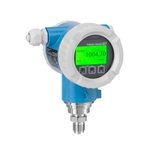
Detect process upsets before they affect product quality: Effective pressure measurement throughout the reactor system helps identify developing restrictions, fouling and abnormal reaction behavior before production performance is affected. Cerabar PMP71B provides reliable pressure monitoring and integrated Heartbeat Technology diagnostics
Stabilize consistent polymerization conditions: Temperature measurement helps control reaction kinetics and catalyst activity throughout production. iTHERM SurfaceLine TM611 provides non-invasive measurement for fast detection of process upsets and cooling inefficiencies
Monitor physical properties in real time:Raman Rxn4 directly measures microstructure and physical properties that are most critical to product quality
Maintain target melt flow properties through accurate reactant dosing: Small variations in propylene and hydrogen feed rates can affect molecular weight distribution and final product performance. Promass F 300 provides mass flow measurement for critical reactant streams
Control reactor inventory under demanding process conditions:Gammapilot FMG50 provides non-invasive radiometric level measurement, supporting precise reactor inventory control and stable operation
Reduce losses during polypropylene grade transitions: Inline Raman Rxn 4 analyzer measures multiple critical process parameters in mixed-phase slurries to ensure optimal yield and batch-to-batch consistency
Centrifugal drying
How to maintain efficient centrifugal drying and stable feed to extrusion?
Stable dryer operation is critical for maintaining throughput and ensuring reliable polypropylene powder transfer to extrusion. Variations in solids inventory, pressure conditions and dryer performance can lead to flow interruptions, reduced drying efficiency and downstream process instability. Measurements of level, pressure, temperature and flow help operators maintain controlled drying conditions, monitor material movement and identify developing disturbances early.
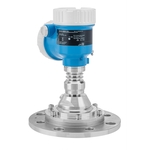
Manage solids inventory throughout the drying process: Inventory control helps avoid process interruptions, fluctuating discharge rates and powder-handling issues. Micropilot FMR67B provides continuous level measurement in powder handling and intermediate storage vessels, supporting smooth material flow through the drying section
Detect developing dryer restrictions before they affect throughput: Pressure monitoring helps identify buildup, blockages and abnormal flow conditions that can reduce drying efficiency. Cerabar PMP71B provides real-time pressure measurement and integrated diagnostics for early detection of developing process disturbances
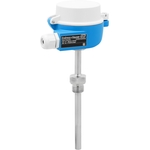
Control dryer operating conditions: Temperature deviations can reduce drying efficiency and affect downstream processing performance. iTHERM TM131 provides continuous temperature measurement for monitoring dryer operation and detecting changing thermal conditions
Optimize washing liquid consumption while maintaining dryer performance: Accurate flow measurement helps optimize washing liquid usage, detect abnormal consumption patterns and support drying conditions. Promag P 300 provides reliable flow measurement for washing liquid supply and recirculation systems
Ensure reliable powder transfer to extrusion: Consistent material movement between the centrifugal dryer and extruder is critical for maintaining throughput and pellet quality. Micropilot FMR67B helps operators maintain controlled powder inventory and product feed to downstream equipment
Optimizarea producţiei de SSBR şi ESBR prin monitorizarea Raman de linie. Obţinerea de informaţii în timp real despre reacţie, stabilizarea microstructurii, creşterea randamentului şi scurtarea ciclurilor seriei.
Utilizăm module cookie pentru a optimiza experienţa dumneavoastră de navigare şi pentru a colecta date statistice în vederea optimizării funcţionalităţii site-ului web şi pentru a vă oferi reclame sau conţinuturi personalizate.
Prin selectarea opţiunii „Acceptare totală”, vă oferiţi consimţământul privind utilizarea modulelor cookie.
Pentru detalii suplimentare, vă rugăm să citiţi Politica noastră privind modulele cookie .




%20with%20flange%20connections%20for%20process%20applications%20-%20PP01.jpg "Picture of Electromagnetic flowmeter Proline Promag P 300 / 5P3B for process applications")


