Încercaţi să căutaţi în funcţie de cuvinte-cheie, codul produsului sau codul de comandă ori numărul de serie, de exemplu, „CM442” sau „Informaţii tehnice”
Introduceţi cel puţin 2 caractere pentru a începe căutarea.
Gas analysis for process control and emission monitoring
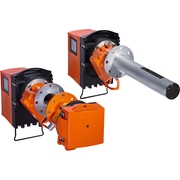
Industrial gas analyzers and complete measuring systems support process control and emission monitoring. The portfolio also covers particle measurement, digital solutions and tunnel monitoring.
ConformitiesTÜV type test Suitability tested acc. DIN EN 15267-1 (2009), DIN-EN 15267-2 (2009), DIN EN 15859 (2010), DIN EN 14181 (2014) Certified for use as Dust monitor and Leak monitor for filter control downstream of dust collectors at installations requiring approval (13th BlmSchV, 17th BlmSchV, 27th BlmSchV, 30th BlmSchV, 44th BlmSchV and TA Luft)
Measured variablesCO2, SO2, NO, NO2, CO, NH3, H2O, CH4
Ambient temperature range 0 °C ... +50 °C Type approved up to 45 °C
ConformitiesMARPOL Annex VI and NTC 2008 – MEPC.177(58) Guidelines for exhaust gas cleaning systems – MEPC.340(77) Guidelines for SCR reduction systems – MEPC.198(62) DNV Rules for Type Approvals (2012) IACS E10 and Rules of major classification societies
Measuring rangeMore than 60 measuring components available (depending on concentration and sample gas composition) Up to 6 components simultanously 2 measuring ranges per component Automatic measuring range switching (adjaustable) 2 limit values per component Measuring ranges depend on application and combination of measuring components
Calculations5s value, Average value, Daily average value, Monthly average value, Annual average value, Moving monthly average, Mass emissions, Daily mass emissions, Monthly mass emissions, Annual mass emissions, Daily counter, Monthly counter, Annual counter
Reliable measurements across processes and infrastructure
From gas composition and concentration to dust levels, visibility and smoke detection, reliable measured values support process control, emission monitoring, product quality and plant safety. Our portfolio covers gas analyzers and complete measuring systems, dust and particle measurement, emission data acquisition, condition monitoring and sensors for tunnel monitoring.
Benefits of our industrial gas analysis solutions
Efficient process control: Continuous measured values provide the basis for controlling processes, improving product yield and maintaining consistent product quality.
Reliable measurement results: The measurement technology and complete measuring system are configured for the measuring task, gas composition and conditions at the measuring point.
Plant safety and environmental compliance: Continuous monitoring identifies critical gas concentrations and provides the measured values and emissions data required for safe operation and documented compliance.
High system availability: Self-monitoring, internal reference checks, replaceable modules and remote diagnostics help detect maintenance requirements early and reduce downtime.
Easy integration and commissioning: Standardized interfaces and pre-installed, interconnected and factory-tested systems reduce installation work and simplify commissioning on site.
Low lifecycle costs: Low maintenance requirements, fewer consumables, modular components and condition-based service can reduce operating costs over the service life.
Selecting a gas analyzer: what matters at the measuring point
Selecting the right industrial gas analyzer starts with the gas components and concentration ranges to be measured. The gas matrix and the conditions at the measuring point – including temperature, pressure, moisture, dust load and corrosive, toxic or flammable components – determine which measuring principle and system design are suitable.
Depending on the application, measurement can take place directly in the process with an in-situ analyzer or in an extractive system. Where a sample is extracted, sampling and gas conditioning must preserve the relevant gas components until analysis. This determines whether a hot/wet or cold/dry system is required.
Installation conditions, hazardous-area requirements, interfaces and the maintenance concept complete the specification. The resulting solution may be a stand-alone analyzer, a modular system or a complete measuring system tailored to the application.
Industrial gas analysis across different industries
The same analyzer technologies take on different roles by industry. Chemical plants and refineries use online analysis for closed-loop control, product quality and the early detection of unsafe gas compositions. Mining, minerals and metals operations rely on gas analysis to monitor processes and emissions in calcination, smelting and sintering supporting environmental compliance and process safety. Power and waste-to-energy plants measure at several stages - from combustion and flue-gas treatment to the final emission measuring point. On ships, the system must also cope with vibration, limited service windows, changing operating conditions and marine approval requirements.
Process gas analysis for process control, product quality and plant safety
Process gas analyzers provide online data at points where a later laboratory result would arrive too late. Their values can be integrated into the control system to adjust a reaction, combustion stage or gas-treatment step while it is running. The same technology can verify feedstock and product quality or detect safety-critical changes in gas composition.
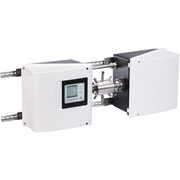
The required configuration may be a single in-situ instrument, a modular extractive analyzer or a complete gas analysis system with sampling, conditioning and control equipment. Analytical method, process connection, housing, interfaces and hazardous-area design are selected together. This allows the solution to match the stream and the task without adding system scope that the application does not need.
Continuous emission monitoring: the complete measuring chain matters
Emission monitoring answers a different question: what leaves the plant, and how must it be documented? A continuous emission monitoring system (CEMS) measures the pollutants and reference parameters specified for the installation. The fuel, process and gas-cleaning stages determine the gas matrix; the applicable rules determine which components, ranges and quality-assurance procedures are required.
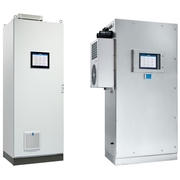
The analyzer is only one part of that chain. A CEMS may also include gas sampling and conditioning, dust and gas-flow measurement, control equipment and emission data management. Modular cabinets leave room for additional measuring components when requirements change. For larger projects, complete shelters can be assembled, interconnected and tested at the factory. This reduces the work and number of interfaces on site and supports faster installation and commissioning.
Dust and particle measurement: concentration and conditions decide
Dust measurement and monitoring can document particle emissions at a stack, reveal a damaged filter bag or track concentration in grinding, dosing and other process steps. Those tasks do not automatically require the same device. The measuring location, expected concentration, particle properties, duct geometry, gas velocity and gas condition all influence the selection.
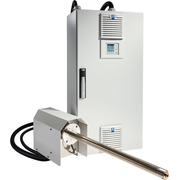
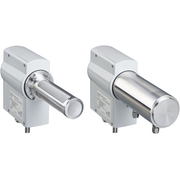
Scattered-light instruments cover low and medium concentrations, while transmittance is used for medium to high concentrations and larger duct diameters. Compact probe designs can be installed from one side and use self-monitoring to reduce routine effort. Saturated flue gas requires a different approach: water droplets would be counted as particles, so an extractive bypass heats the partial gas flow above the dew point before the dust concentration is measured.
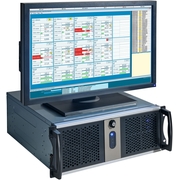
For compliance reports, measured values and operating states must be collected, reviewed, stored, and presented under the applicable rules. A data acquisition and handling system such as MEAC300 turns analyzer signals into traceable emission and operating data, including limit exceedances, status information and reports.
The Monitoring Box serves a different purpose. It combines current and historical device data to make changes in analyzer and system condition visible. Operating and service teams can use this information to decide if action is needed. They can also prepare work before a service visit, including required spare parts.
Tunnel monitoring for routine operation and emergencies
Dedicated sensors perform distinct tasks in road tunnels. Air quality measuring devices monitor visibility together with CO and, depending on the device configuration, NO or NO2, providing input for ventilation control; air-flow velocity and direction are measured separately. Smoke detectors recognize smoke particles within seconds and alert the tunnel control system. Depending on the application, dedicated visual range measuring devices provide additional visibility measurement inside the tunnel.
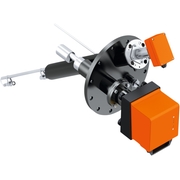
Tunable diode laser absorption spectroscopy (TDLAS) gas analyzers provide concentration measurement for a range of process applications. Explore the available analyzers and find the right solution for your measuring task.
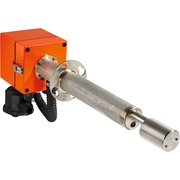
Quenched fluorescence (QF) analyzers provide fast, continuous oxygen measurement across a wide range of process applications. Explore the available analyzers and find the right solution for your measuring task.
Raman spectroscopy analyzers provide gas composition measurement for a wide range of process applications. Explore the available analyzers and find the right solution for your measuring task.
Frequently asked questions about industrial gas analysis
Articole
Descoperiţi resurse suplimentare
Emission monitoring solutions PDF, 4.9 MB
A comprehensive portfolio for continuous emission monitoring. With future-orientated solutions tailored to the respective measuring task in your industry.
Discover how a power plant in Kuopio modernized emissions monitoring with the MCS200HW analyzer system, combining reliable operation, regulatory compliance, and reduced maintenance effort.
A waste-to energy (WtE) plant in Sant Adrià del Besòs near Barcelona in Spain has rolled out an innovative system for ensuring better environmental practices.
Descoperiţi cum Ciments Calcia îşi transformă unităţile de producţie din Franţa prin inovaţii cu emisii reduse de carbon, producţia de clincher de ultimă generaţie şi sisteme de analiză a gazelor de înaltă performanţă, aplicate cu rapiditate şi fiabilitate.
Monitorizarea continuă a CO îmbunătăţeşte siguranţa şi controlul prăjirii în producţia de cafea, în timp ce analiza precisă a gazelor în timpul ambalării ajută la protejarea aromei cafelei şi calităţii produsului.
/
Respectăm confidenţialitatea dumneavoastră
Utilizăm module cookie pentru a optimiza experienţa dumneavoastră de navigare şi pentru a colecta date statistice în vederea optimizării funcţionalităţii site-ului web şi pentru a vă oferi reclame sau conţinuturi personalizate.
Prin selectarea opţiunii „Acceptare totală”, vă oferiţi consimţământul privind utilizarea modulelor cookie.
Pentru detalii suplimentare, vă rugăm să citiţi Politica noastră privind modulele cookie .